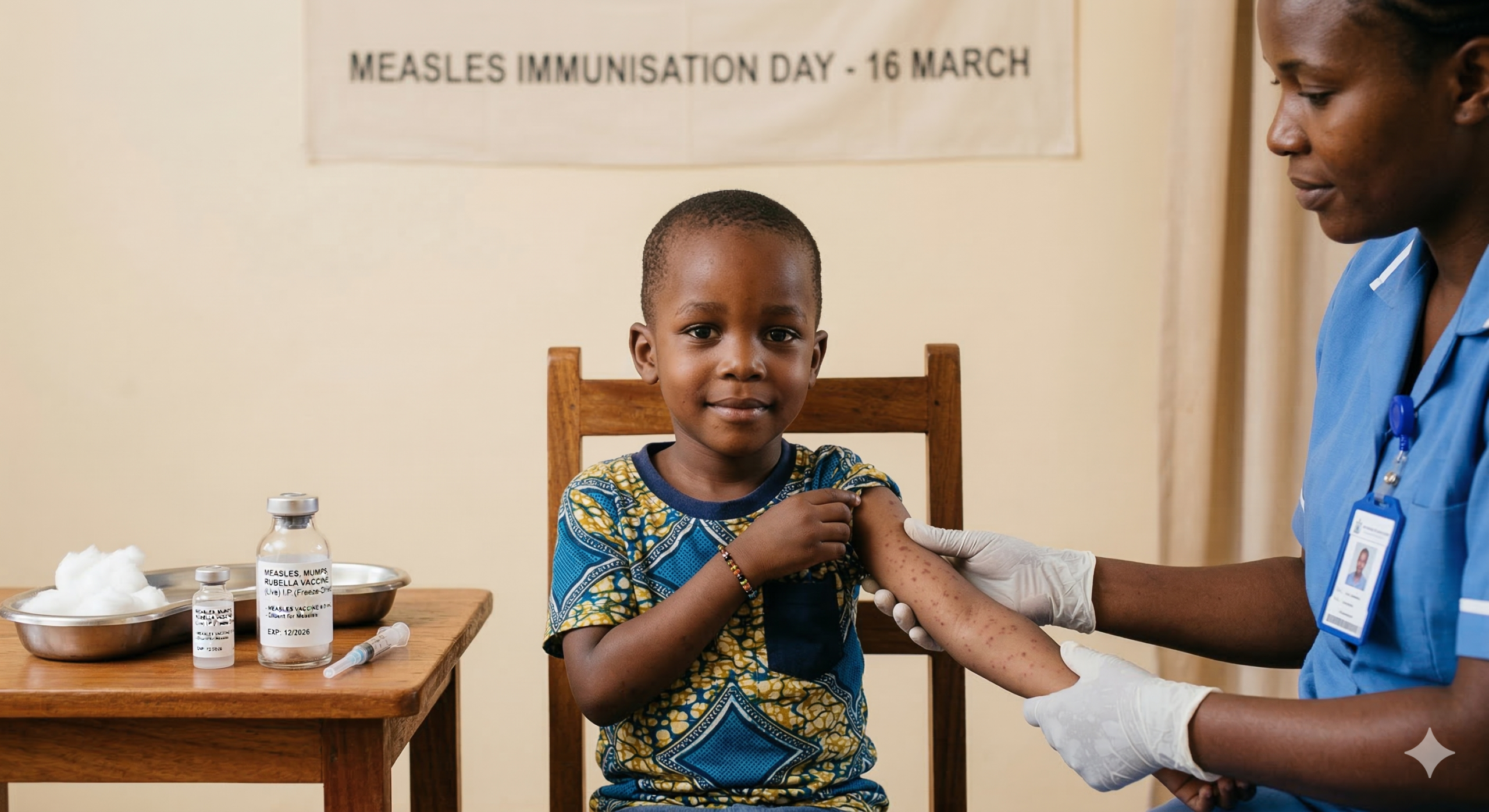

Behind every successful response to an epidemic, every contained outbreak, and every declining disease curve is a system working quietly in the background — collecting data, flagging anomalies, and triggering action before situations spiral out of control. Disease surveillance and public health programmes represent the organised infrastructure that allows health authorities to see what is happening across a population in near real time, and to respond with coordinated, evidence-based interventions. In the age of emerging infections and antimicrobial resistance, these systems are not a luxury — they are a necessity.
What Is Disease Surveillance?
Public health surveillance is the continuous, systematic collection, analysis, interpretation, and dissemination of health data for the purpose of informing action. The ultimate goal is not data collection for its own sake, but the timely application of that data to prevent and control disease.
A functioning surveillance system answers several critical public health questions: Is a particular disease increasing or decreasing? Are there geographic clusters suggesting a localised outbreak? Are specific age groups, occupations, or communities disproportionately affected? Are the interventions currently in place working?
The World Health Organization defines surveillance as the foundation of public health decision-making — and with good reason. Without reliable, representative, and timely data, public health responses are essentially guesswork. With it, authorities can allocate resources strategically, identify high-risk populations for targeted interventions, and detect outbreaks early enough to contain them before they become full-scale emergencies.
Types of Public Health Surveillance Systems
Not all surveillance is designed the same way. Different systems serve different purposes, and most national health programmes rely on a combination of approaches.
Passive Surveillance
Passive surveillance is the most commonly used form worldwide. In this system, healthcare providers — hospitals, clinics, laboratories — report cases of notifiable diseases to public health authorities as part of their routine duties. The data flows upward from the facility level to district, state, and national levels through established reporting channels.
The major advantages of passive surveillance are its cost-effectiveness and broad geographic reach. However, it depends heavily on the willingness and capacity of frontline providers to report accurately and consistently. Underreporting is a chronic challenge, particularly in resource-limited settings where health workers are overburdened, and many cases never reach a formal healthcare facility at all.
Active Surveillance
In active surveillance, public health authorities proactively reach out to healthcare providers, communities, or specific populations to seek out cases — rather than waiting for reports to come in. This approach is typically deployed during outbreak investigations, disease elimination campaigns, or when passive surveillance data suggests an emerging problem.
Active surveillance generates more complete and timely data but requires significantly more resources. During polio eradication campaigns, for instance, active case finding — where field workers go house to house looking for children with acute flaccid paralysis — is essential to achieving and verifying the absence of transmission.
Sentinel Surveillance
Sentinel surveillance involves collecting detailed data from a select number of strategically chosen sites rather than attempting to capture all cases across an entire population. These sentinel sites — typically high-volume hospitals, laboratories, or clinics — provide rich, high-quality data on disease trends, severity, and emerging patterns.
Influenza surveillance systems in most countries operate largely through sentinel networks, where selected facilities track influenza-like illness throughout the year, providing early warning of seasonal peaks and novel strains.
Syndromic Surveillance
Syndromic surveillance focuses on clusters of symptoms (syndromes) rather than confirmed diagnoses. By monitoring patterns such as increases in fever and rash presentations, or spikes in pharmacy purchases of antipyretics, syndromic systems can detect unusual health events even before laboratory confirmation is available. During mass gatherings, natural disasters, or bioterrorism scenarios, syndromic surveillance provides a critical early signal.
Integrated Disease Surveillance Programme (IDSP): India’s Framework
India’s Integrated Disease Surveillance Programme (IDSP) stands as one of the largest and most ambitious disease surveillance initiatives in the developing world. Launched in 2004 with support from the World Bank and the Government of India, IDSP was designed to decentralise surveillance, strengthen laboratory capacity, and improve the timeliness of outbreak detection across the country.
The IDSP operates through a three-tiered reporting structure:
- S (Suspected) cases — reported by community health workers and non-medical personnel based on clinical presentation
- P (Probable) cases — reported by medical officers based on clinical examination and assessment
- L (Laboratory-confirmed) cases — reported from designated laboratories after confirmatory testing
This stratified approach allows for broad case capture at the community level while maintaining diagnostic rigour at the laboratory level. Data is reported weekly through an online portal, consolidated at district and state levels, and analysed centrally at the National Centre for Disease Control (NCDC) in New Delhi.
IDSP also includes a dedicated rapid response team (RRT) mechanism at district, state, and national levels. When surveillance data or community reports indicate a potential outbreak, RRTs are mobilised to investigate, collect samples, implement control measures, and report findings — all within defined time frames.
Outbreak Investigation: From Alert to Action
When surveillance systems detect an unusual cluster of cases, the process of outbreak investigation begins. A structured, step-by-step approach ensures that investigations are systematic, evidence-based, and lead to actionable conclusions.
The classic steps of outbreak investigation include:
- Verify the diagnosis — Confirm that reported cases represent a genuine disease and not a laboratory error or reporting artifact.
- Confirm the outbreak — Determine whether the number of cases exceeds what is normally expected (the epidemic threshold).
- Define a case — Establish a clear, standardised case definition specifying clinical criteria and exposure windows.
- Find cases systematically — Use active case finding to identify all cases meeting the definition, including those not yet reported.
- Describe the outbreak — Characterise cases by person (who is affected), place (where), and time (when) — the epidemiological triad of outbreak description.
- Develop hypotheses — Based on descriptive data, formulate hypotheses about the likely source and mode of transmission.
- Test hypotheses — Conduct analytical studies (case-control or cohort studies) and/or environmental/laboratory investigations to confirm or refute hypotheses.
- Implement control measures — Apply interventions appropriate to the identified source and transmission route, even while investigation continues.
- Communicate findings — Produce outbreak investigation reports for health authorities, and communicate key messages to the public and media where appropriate.
Epidemic Curves and Outbreak Analysis
A cornerstone of outbreak investigation is the epidemic curve (epi curve) — a histogram plotting the number of cases by time of symptom onset. The shape of the epi curve provides powerful visual clues about the nature of the outbreak:
- A point source outbreak (where all cases are exposed to a common source at roughly the same time) produces a steep rise and fall, with most cases clustering within one incubation period.
- A propagated outbreak (where cases spread from person to person) shows a series of progressively larger waves, each approximately one incubation period apart.
- A continuous common source outbreak (prolonged exposure to a contaminated source) shows a plateau shape with cases extending over a longer period.
Reading an epi curve correctly can rapidly narrow down hypotheses about the source and transmission mechanism, guiding both investigation and control.
National Public Health Programmes in India
India’s disease burden is enormous and diverse — spanning vector-borne diseases, tuberculosis, viral hepatitis, leprosy, and emerging infections. A network of national public health programmes provides the programmatic framework for disease prevention, surveillance, treatment, and community-level action.
National Tuberculosis Elimination Programme (NTEP)
Formerly known as the Revised National TB Control Programme (RNTCP), the National Tuberculosis Elimination Programme (NTEP) is India’s flagship programme for TB control, aligned with the national goal of eliminating TB by 2025 — five years ahead of the global Sustainable Development Goal target. NTEP provides free diagnosis and treatment for all TB patients across the country through a network of designated microscopy centres, drug stores, and DOTS (Directly Observed Treatment, Short-course) providers. It incorporates active case finding, universal drug susceptibility testing, nutritional support through the Nikshay Poshan Yojana, and digital case-based surveillance through the Nikshay portal.
National Vector Borne Disease Control Programme (NVBDCP)
The National Vector Borne Disease Control Programme (NVBDCP) oversees prevention and control of six major vector-borne diseases in India: malaria, dengue, chikungunya, Japanese encephalitis, lymphatic filariasis, and kala-azar (visceral leishmaniasis). The programme coordinates insecticide-treated net distribution, indoor residual spraying, larval source management, mass drug administration for filariasis elimination, and disease surveillance across endemic states.
Both NTEP and NVBDCP exemplify the principle that disease control at scale requires not just clinical treatment but surveillance infrastructure, supply chain management, community engagement, and intersectoral coordination.
Epidemiological Monitoring and Coordinated Public Health Action
Surveillance and outbreak investigation are only as valuable as the actions they trigger. Epidemiological monitoring — the ongoing review and interpretation of surveillance data — enables public health authorities to track disease trends over time, evaluate programme performance, and adapt strategies in response to changing epidemiological patterns.
Key components of effective epidemiological monitoring include:
Field Epidemiology: Trained field epidemiologists are deployed to investigate outbreaks, assess programme implementation, and build local surveillance capacity. India’s Epidemic Intelligence Service (EIS) and the Field Epidemiology Training Programme (FETP) develop this cadre of specialists.
Laboratory Networks: Surveillance data is only as reliable as the laboratory systems underpinning it. Reference laboratories at the national and regional level provide confirmatory diagnosis, strain typing, antimicrobial resistance profiling, and quality assurance for the broader diagnostic network.
Health Information Systems: Digital platforms — including IDSP’s online reporting portal, the Nikshay TB case management system, and the Health Management Information System (HMIS) — increasingly integrate surveillance data across programmes, enabling more comprehensive analysis and faster decision-making.
Community and Intersectoral Action: Ultimately, the effectiveness of any surveillance system depends on its connection to communities. Community health workers, ASHA workers, and local health volunteers serve as the eyes and ears of the surveillance system at the grassroots level — reporting unusual illness clusters, mobilising communities for preventive action, and bridging the gap between formal health systems and underserved populations.
Conclusion
Disease surveillance and public health programmes are the silent sentinels of population health. From the weekly S-P-L reports flowing through IDSP to the epi curves plotted during outbreak investigations, from the NTEP treatment centres reaching drug-resistant TB patients to the NVBDCP field teams spraying insecticide in malaria-endemic villages — these systems collectively represent the organised, data-driven commitment to protecting communities from communicable disease. Investing in their strength, reach, and integration is not merely good public health policy; it is one of the most powerful commitments a society can make to the well-being of all its members.
References
- National Centre for Disease Control, Government of India. Integrated Disease Surveillance Programme (IDSP) [Internet]. New Delhi: NCDC; 2024 [cited 2025 May 7]. Available from: https://ncdc.mohfw.gov.in/index1.php?lang=1&level=1&sublinkid=5784&lid=3689
- World Health Organization. Public health surveillance [Internet]. Geneva: WHO; 2023 [cited 2025 May 7]. Available from: https://www.who.int/topics/public_health_surveillance/en/
- Centers for Disease Control and Prevention. Steps of an outbreak investigation [Internet]. Atlanta: CDC; 2022 [cited 2025 May 7]. Available from: https://www.cdc.gov/foodsafety/outbreaks/investigating-outbreaks/investigations/index.html
- Central TB Division, Ministry of Health and Family Welfare. National Tuberculosis Elimination Programme: Annual report 2023 [Internet]. New Delhi: MoHFW; 2023 [cited 2025 May 7]. Available from: https://tbcindia.gov.in/index1.php?lang=1&level=1&sublinkid=4160&lid=3177
- Directorate of National Vector Borne Disease Control Programme. NVBDCP operational guidelines [Internet]. New Delhi: MoHFW; 2023 [cited 2025 May 7]. Available from: https://nvbdcp.gov.in/index4.php?lang=1&level=0&linkid=371&lid=3689
Global Action Plan on Antimicrobial Resistance 2026–2036: What It Means for the World’s Most Urgent Health Crisis

- Source: MResPilot
World Malaria Day 2026: The World Is Closer Than Ever to Ending Malaria — But the Clock Is Ticking

- Source: MResPilot