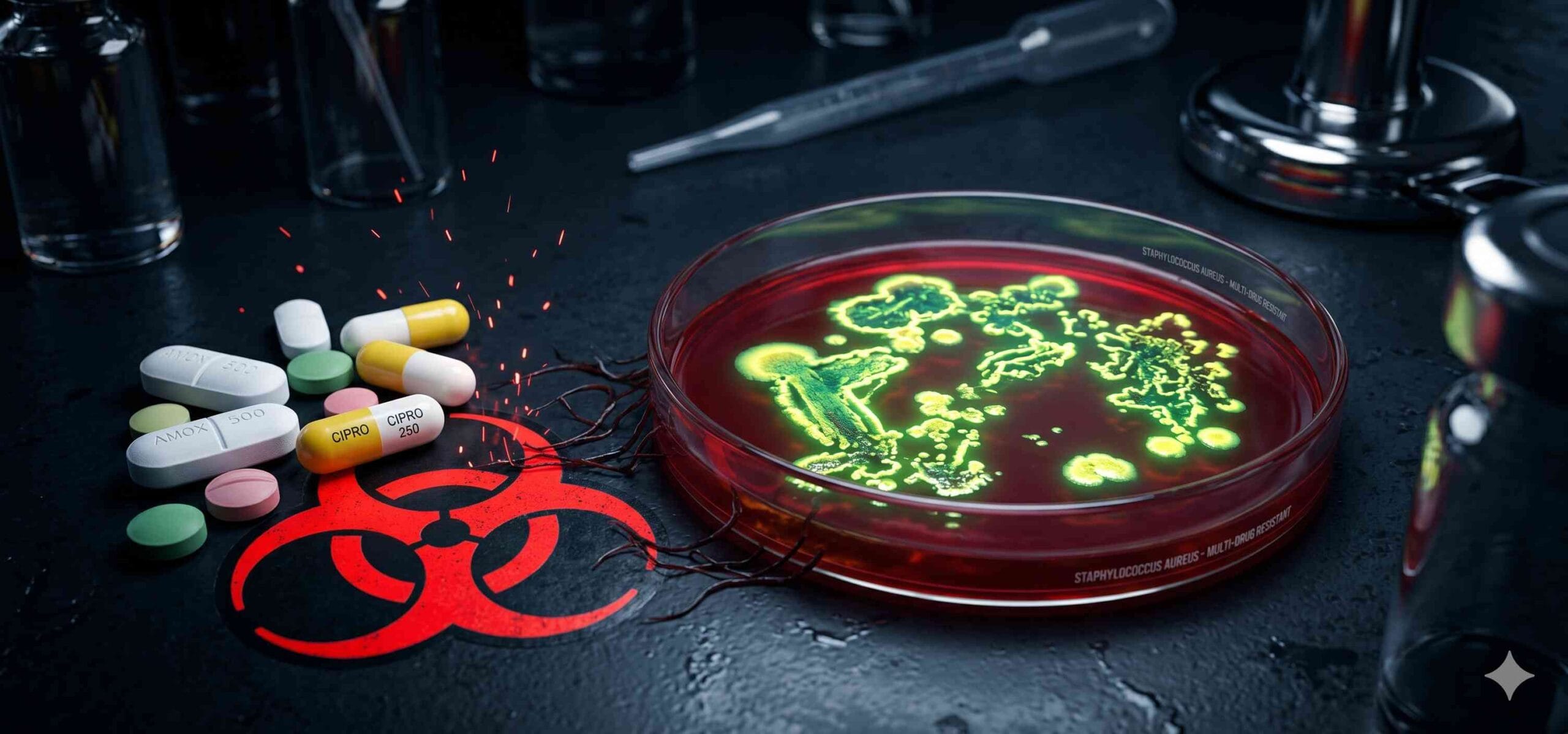
In a packed plenary hall in Geneva on May 23, 2026, delegates from member states of the World Health Organization accomplished something that global health advocates had been pushing for years: they adopted the updated Global Action Plan on Antimicrobial Resistance (GAP-AMR) 2026–2036, a comprehensive, ten-year blueprint to address one of the most dangerous and most under-discussed threats to human civilisation.
The timing was neither coincidental nor comfortable. WHO’s Global Antimicrobial Resistance and Use Surveillance System (GLASS) had just published data showing that one in every six common bacterial infections recorded in 2023 was already resistant to antibiotic treatment. Studies estimate that 4.71 million deaths were associated with bacterial AMR in 2021 alone. And if current trajectories hold — if the world continues to overuse, misuse, and underregulate antimicrobials across human health, animal agriculture, aquaculture, and the environment — AMR could cause up to 39 million deaths by 2050, disproportionately devastating low- and middle-income countries where healthcare systems have the least capacity to absorb the shock.
The 79th World Health Assembly’s adoption of GAP-AMR 2026–2036 is a moment of genuine significance. Whether it becomes a turning point or another well-intentioned document gathering digital dust depends entirely on what happens next.
What Is Antimicrobial Resistance, and Why Does It Matter?
Antimicrobial resistance occurs when bacteria, viruses, fungi, and parasites evolve over time to no longer respond to the medicines used to treat them. The result is that infections once easily cured with a course of antibiotics — urinary tract infections, pneumonia, tuberculosis, sepsis — become progressively harder, and sometimes impossible, to treat. Patients stay sicker for longer. Surgeries, chemotherapy, and organ transplants — which all rely on effective antibiotics to prevent secondary infection — become riskier. The entire scaffolding of modern medicine begins to shake.
AMR is not a future threat. It is already here. Drug-resistant tuberculosis claims hundreds of thousands of lives annually. Methicillin-resistant Staphylococcus aureus (MRSA) is a fixture of hospital wards worldwide. Carbapenem-resistant Enterobacteriaceae (CRE) — sometimes called “nightmare bacteria” — can kill up to 50% of patients with bloodstream infections. Extended-spectrum beta-lactamase (ESBL) producing bacteria are increasingly common in community settings, not just hospitals.
The drivers of AMR are multiple and interlinked: inappropriate prescribing by clinicians, self-medication and over-the-counter access to antibiotics without prescription, widespread use of antimicrobials as growth promoters in livestock, antibiotic discharge into water bodies from pharmaceutical manufacturing, weak regulatory frameworks in many countries, and insufficient surveillance to track resistance patterns over time and geography.
The GAP-AMR 2026–2036: What Is New?
The 2026–2036 plan is the second edition of the Global Action Plan on AMR, building on a decade of implementation following the first GAP-AMR adopted by the World Health Assembly in 2015. That original plan laid important foundations: over 170 countries have now developed multisectoral national action plans on AMR, the WHO Priority Pathogen List was established, and organisations like GARDP (Global Antibiotic Research and Development Partnership) were created to accelerate R&D for new antimicrobials.
But the first decade also exposed significant gaps. Funding remained inadequate. Implementation was uneven. Surveillance systems in low-income countries were weak. The agrifood and environmental dimensions of AMR were underprioritised. And the 2024 UN General Assembly Political Declaration on AMR — which set a headline target of reducing AMR-associated deaths in humans by 10% by 2030 — demanded a more robust, equity-centred, and action-oriented framework.
The GAP-AMR 2026–2036 was developed through a consultative process led by the Quadripartite organisations — WHO, FAO, UNEP, and WOAH (World Organisation for Animal Health) — with extensive engagement from member states and stakeholders across sectors. Its core architecture rests on a One Health approach: the recognition that human health, animal health, plant health, and environmental health are inseparably linked, and that AMR cannot be tackled effectively by addressing any single sector in isolation.
Key Strategic Pillars of the New Plan
The updated GAP-AMR organises its decade-long framework around several interconnected strategic objectives, each building on the hard lessons of the first decade.
1. Prevention First: Reducing the Need for Antimicrobials The plan places unprecedented emphasis on preventing infections before they require treatment. This includes strengthening infection prevention and control (IPC) in healthcare facilities; expanding vaccination programmes to reduce the infectious disease burden; improving water, sanitation and hygiene (WASH) infrastructure — particularly in low- and middle-income countries where poor sanitation remains a major AMR driver; and advancing biosecurity and responsible animal husbandry practices in agriculture and aquaculture.
2. Antimicrobial Stewardship Across Sectors The plan calls for responsible, equitable, and sustainable use of antimicrobials across human health, animal health, and food production systems. A central commitment from the 2024 UN Political Declaration is reflected here: at least 70% of antibiotics used for human health globally should belong to the WHO Access group — drugs with minimal side effects and lower potential to cause AMR. Equally, reducing the use of medically important antimicrobials as growth promoters in livestock is treated as a non-negotiable priority.
3. Strengthened Surveillance and Data Systems Knowing where resistance is emerging, how fast it is spreading, and which pathogens are driving mortality is foundational to any effective response. The updated plan calls for significant investment in expanding GLASS and equivalent animal and environmental surveillance systems, particularly in regions with historically weak data infrastructure. Community, academic, and civil society engagement in surveillance data sharing is explicitly encouraged.
4. Innovation: New Antimicrobials, Diagnostics, and Vaccines The pipeline for new antibiotics is critically thin. Most major pharmaceutical companies abandoned antibiotic development decades ago because the economic return — patients take a course of antibiotics for five to seven days, once, and then stop — cannot compete with drugs for chronic conditions taken daily for decades. The GAP-AMR 2026–2036 calls for new push-and-pull incentive mechanisms, de-linkage of R&D costs from sales volumes, and public investment in innovative therapeutics including bacteriophages, antimicrobial peptides, and novel antibiotic classes. Rapid diagnostic tools that enable precise pathogen identification — reducing unnecessary broad-spectrum antibiotic prescribing — are identified as equally critical.
5. Equitable Access to Effective Antimicrobials Here lies perhaps the starkest contradiction in the global AMR landscape: while some parts of the world grossly overuse antibiotics, others lack adequate access to the essential antimicrobials they need to treat life-threatening infections. GARDP estimates that improving equitable access to existing antibiotics could prevent more than 50 million deaths by 2050. The new plan insists that access and stewardship must be pursued simultaneously — not traded off against each other — and that the financing gap for AMR action in low-income countries must be addressed structurally, not through ad hoc donor contributions.
6. Financing and National Action Plans A defining weakness of the 2015 plan was the absence of sustained national financing. The updated GAP-AMR calls for at least 60% of countries to have funded national action plans on AMR by 2030, supported by US$100 million in catalytic financing and a strengthened Antimicrobial Resistance Multi-Partner Trust Fund. Nigeria’s hosting of the 5th Global Ministerial Conference on AMR in Abuja in June 2026 is expected to generate additional political momentum and financial commitments.
The Equity Dimension: Who Bears the Burden of AMR?
The 2026–2036 plan makes equity a central, not peripheral, concern. This represents a meaningful shift from the 2015 framework and reflects hard data: AMR deaths are projected to be dramatically worse in sub-Saharan Africa and South Asia, where healthcare infrastructure is weakest, access to quality-assured antibiotics is most unequal, and surveillance systems are most fragmented.
The debate over technology transfer — one of the sticking points during the plan’s drafting, with Brazil, Indonesia, and Colombia raising concerns that proposed language limiting transfer to “voluntary and mutually agreed” mechanisms was inadequate — reflects the deeper political tension between intellectual property protection and equitable access. Effective technology transfer to enable regional production of antibiotics and diagnostics in low- and middle-income countries is not merely a diplomatic preference; it is a survival necessity for the populations bearing the highest AMR mortality burden.
The updated plan embeds equity language throughout its strategic objectives and is clear that low- and middle-income countries must be empowered — not just supported — to protect their populations from AMR.
India’s Stake in the Global AMR Framework
India sits at a critical intersection in the AMR story. It is one of the world’s largest consumers of antibiotics — across human health, veterinary use, and aquaculture — and simultaneously one of the countries where drug-resistant infections impose among the heaviest mortality burdens. MRSA, drug-resistant typhoid, and multidrug-resistant tuberculosis are all significant public health concerns.
India has developed a National Action Plan on AMR and has been an active participant in global AMR governance. The GAP-AMR 2026–2036’s emphasis on WASH infrastructure, vaccination, and equitable access aligns closely with India’s own public health priorities. Domestically, antibiotic stewardship programmes in tertiary hospitals, regulation of over-the-counter antibiotic sales, and environmental surveillance of pharmaceutical effluents all represent areas where implementation can be accelerated in alignment with the new global framework.
From Plan to Practice: The Critical Decade Ahead
The story of global AMR governance is littered with strong declarations and weak implementation. The difference between GAP-AMR 2026–2036 becoming a turning point and becoming a footnote will be determined by three things: accountability, financing, and political will that outlasts the news cycle.
On accountability, the plan requests the WHO Director-General to report on progress biennially — at the 80th and 82nd World Health Assemblies in 2027 and 2029, and again at the 84th in 2031. These checkpoints create structured moments for course correction.
On financing, the US$100 million catalytic fund and the push toward nationally funded AMR plans represent minimum ambitions. The scale of the AMR threat — 39 million projected deaths by 2050 — demands orders of magnitude more investment than is currently committed.
And on political will: the 5th Global Ministerial Conference on AMR in Abuja in June 2026, combined with the normative authority of WHA79’s adoption of the new plan, creates a rare window of political alignment. Whether governments capitalise on it — in budgets, in legislation, in public communication — will determine whether this decade of action is remembered as the moment the world finally turned the tide on AMR.
Key Takeaways
- The GAP-AMR 2026–2036 was adopted by the 79th World Health Assembly on May 23, 2026, at Geneva.
- AMR caused 4.71 million associated deaths in 2021 and could cause up to 39 million deaths by 2050 without urgent action.
- The plan is built on a One Health approach, linking human, animal, plant, and environmental health sectors.
- Core priorities include prevention, antimicrobial stewardship, surveillance, innovation, equitable access, and national financing.
- By 2030, the plan aims to deliver a 10% reduction in bacterial AMR-associated human deaths.
- At least 70% of antibiotics used in human health should belong to the WHO Access group by 2030.
- Equitable technology transfer and regional production capacity remain contested but essential priorities.
Frequently Asked Questions (FAQs)
Q1. What is the Global Action Plan on Antimicrobial Resistance 2026–2036?
The GAP-AMR 2026–2036 is a comprehensive, ten-year global framework adopted by the 79th World Health Assembly in Geneva on May 23, 2026. It was developed jointly by the Quadripartite organisations — WHO, FAO, UNEP, and WOAH — through extensive multisectoral consultation. The plan provides a coordinated One Health blueprint to address antimicrobial resistance across human health, animal health, food systems, and the environment, and aims to operationalise the targets set in the 2024 UN General Assembly Political Declaration on AMR.
Q2. What is the biggest danger of antimicrobial resistance?
The most immediate danger is the erosion of effective treatment for common bacterial infections — including pneumonia, sepsis, urinary tract infections, and tuberculosis — that currently kill millions of people who lack access to the right antibiotics, and that are increasingly untreatable even in well-equipped settings. The long-term systemic danger is the undermining of modern medicine’s foundations: surgeries, cancer treatment, and organ transplants all depend on antibiotics working. Without effective antimicrobials, these procedures become far riskier or impossible.
Q3. How does the One Health approach work in the context of AMR?
The One Health approach recognises that antibiotic resistance does not respect the boundaries between humans, animals, and ecosystems. Antibiotics used in livestock agriculture can select for resistant bacteria that enter the food chain and water systems, ultimately infecting humans. Environmental contamination from pharmaceutical manufacturing sites is another vector. Addressing AMR effectively therefore requires simultaneous action across human healthcare, veterinary medicine, agriculture, aquaculture, and environmental management — rather than treating these as separate problems with separate solutions.
Q4. What is the 10% reduction target, and is it realistic?
The 2024 UN General Assembly Political Declaration on AMR — now embedded in the GAP-AMR 2026–2036 — commits to reducing AMR-associated deaths in humans by 10% by 2030. Given that an estimated 4.71–4.95 million deaths were associated with AMR in 2021, a 10% reduction would mean preventing approximately 450,000–500,000 deaths annually within four years. Achieving this target requires significant improvements in infection prevention, antibiotic stewardship, surveillance, and access to effective antibiotics, particularly in low- and middle-income countries. Experts describe it as ambitious but achievable with sufficient political commitment and financing.
Q5. What can individuals do to help fight antimicrobial resistance?
Individual behaviour makes a meaningful collective difference. Key actions include: never self-medicating with antibiotics or using leftover prescriptions; always completing a prescribed antibiotic course in full; never purchasing antibiotics without a valid prescription; supporting vaccination as a way of reducing the number of infections requiring antibiotic treatment; practising good hand hygiene to prevent infection spread; and advocating for responsible antibiotic practices in food systems when making consumer choices. Healthcare professionals additionally carry responsibility for prescribing antibiotics only when clinically indicated and choosing the most targeted rather than the broadest spectrum available.
References
- World Health Organization. Seventy-ninth World Health Assembly – Daily update: 23 May 2026 [Internet]. Geneva: WHO; 2026 May 23 [cited 2026 May 25]. Available from: https://www.who.int/philippines/news/detail-global/23-05-2026-seventy-ninth-world-health-assembly—daily-update–23-may-2026
- World Health Organization. Draft updated global action plan on antimicrobial resistance 2026–2036. EB158/18 [Internet]. Geneva: WHO; 2026 Jan [cited 2026 May 25]. Available from: https://apps.who.int/gb/ebwha/pdf_files/EB158/B158_18-en.pdf
- United Nations Environment Programme. World leaders commit to decisive action on antimicrobial resistance [Internet]. New York: UNEP; 2024 Sep 26 [cited 2026 May 25]. Available from: https://www.unep.org/news-and-stories/press-release/world-leaders-commit-decisive-action-antimicrobial-resistance
- Mirage News. WHA adopts new global plan on antimicrobial resistance [Internet]. 2026 May 23 [cited 2026 May 25]. Available from: https://www.miragenews.com/wha-adopts-new-global-plan-on-antimicrobial-1679890/
- GARDP. GARDP statement on the global action plan on AMR update [Internet]. Geneva: Global Antibiotic Research and Development Partnership; 2025 Oct 6 [cited 2026 May 25]. Available from: https://gardp.org/gardp-statement-on-the-global-action-plan-on-amr-update/