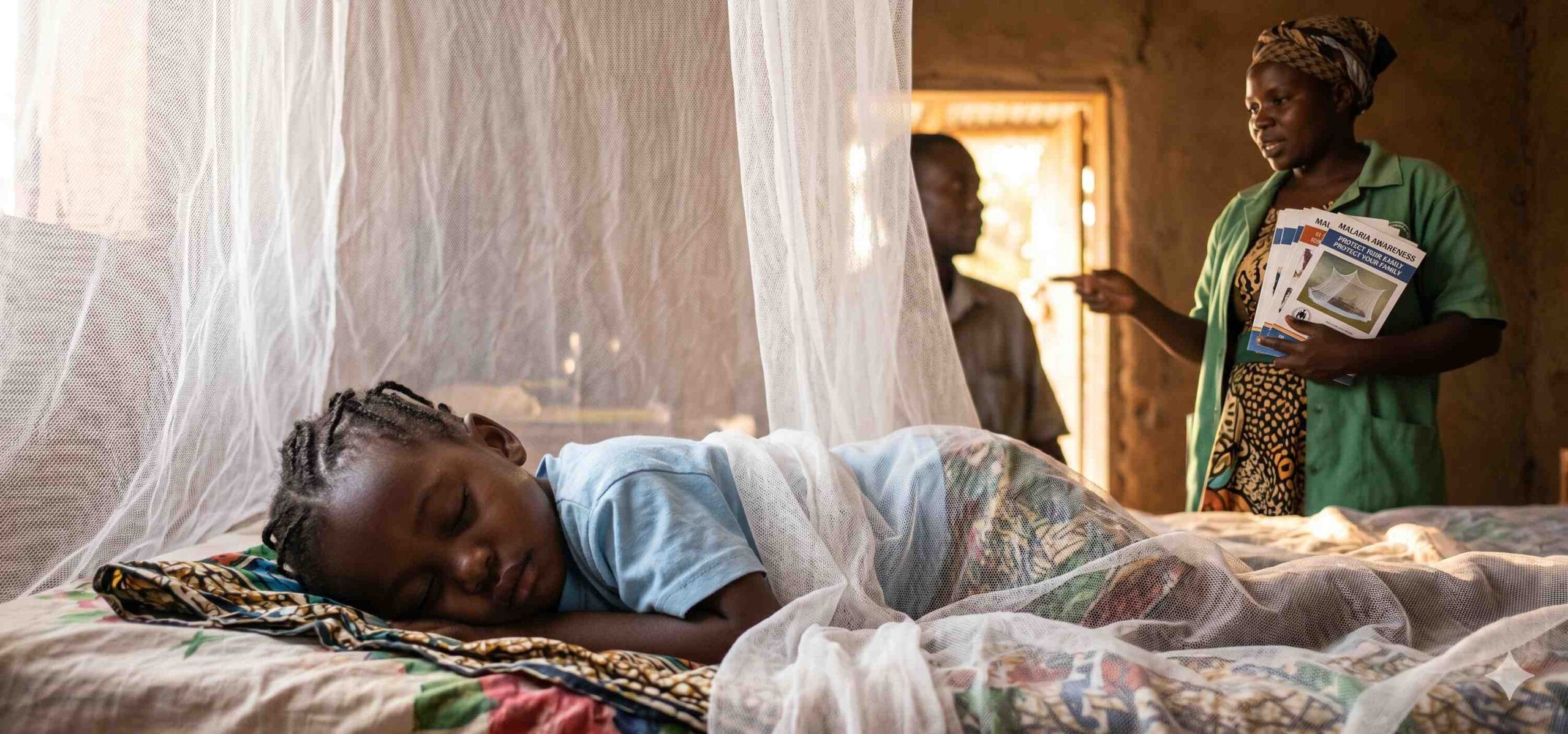
Every year on April 25, the world pauses to confront one of humanity’s oldest and deadliest diseases. World Malaria Day 2026 arrives with a theme that is equal parts victory lap and urgent warning: “Driven to End Malaria: Now We Can. Now We Must.” The message from the World Health Organization (WHO) is clear — the tools exist, the progress is real, but the window to act is narrowing fast.
What Is World Malaria Day?
World Malaria Day, observed every April 25, was established by the World Health Assembly in 2007. It serves as a global platform to highlight the need for sustained investment, political commitment, and innovation in the fight against malaria — a preventable and treatable disease that continues to claim hundreds of thousands of lives every year, most of them children under the age of five in sub-Saharan Africa.
World Malaria Day 2026 Theme: “Driven to End Malaria: Now We Can. Now We Must.”
This year’s theme is a rallying cry rooted in evidence. According to WHO, since the year 2000, an estimated 2.3 billion malaria cases and 14 million deaths have been averted globally. Between 2000 and 2024, the number of malaria-endemic countries fell sharply — dropping from 108 to just 80. To date, 47 countries have been certified malaria-free, including two in 2024 and three in 2025 alone.
The Greater Mekong Subregion stands as a particularly remarkable example — malaria cases there have fallen by nearly 90%, even in areas with entrenched drug resistance, proving that elimination is achievable even in the most challenging environments.
The Threats That Could Reverse All Progress
Despite the gains, the WHO World Malaria Report 2025 sounds a clear alarm. Several converging threats risk undoing decades of hard work:
- Drug resistance: Artemisinin partial resistance — resistance to the frontline treatment for malaria — is now confirmed in four African countries (Eritrea, Rwanda, Uganda, and Tanzania) and is spreading.
- Insecticide resistance: Resistance to pyrethroids, the main chemical used in bed nets, is now confirmed in 48 of 53 reporting countries.
- Diagnostic failure: Gene deletions that cause rapid diagnostic tests to return false negatives are now reported in 46 endemic countries.
- Invasive mosquitoes: Anopheles stephensi, an urban-adapted, insecticide-resistant mosquito, is expanding its range across Africa, threatening cities previously considered low-risk.
- Funding crisis: 2024 global malaria funding stood at just US$ 3.9 billion — less than half the US$ 9.3 billion target. The projected shortfall of US$ 5.4 billion leaves the global response dangerously under-resourced.
Climate change, conflict, and humanitarian crises are also driving malaria resurgence in vulnerable regions.
Reasons for Hope: Breakthroughs in 2025–2026
The story is not all bleak. Significant advances are making a difference on the ground:
Malaria Vaccines: In a landmark development, malaria vaccines are now rolling out across 25 countries, protecting millions of children. This represents one of the most significant public health milestones in recent decades.
Next-Generation Bed Nets: In 2024, 84% of bed nets shipped to Africa were higher-efficacy PBO or dual active ingredient nets — up from just 10% in 2019.
Chemoprevention at Scale: Seasonal malaria chemoprevention (SMC) now reaches 54 million children annually, preventing infection during peak transmission seasons.
What You Can Do
Awareness saves lives. On World Malaria Day 2026, you can:
- Donate to organisations such as the Global Fund, Malaria No More, or Against Malaria Foundation.
- Advocate for sustained government funding for malaria programmes.
- Spread awareness on social media using #WorldMalariaDay and #EndMalaria.
- Support community health workers who are often the first — and only — line of defence in remote communities.
The Bottom Line
World Malaria Day 2026 reminds us that ending malaria is no longer a distant dream — it is a realistic, funded, and scientifically achievable goal. But progress is fragile. With the right tools in place and the political will to back them, no one should die from a mosquito bite in 2026. The question is whether the world will choose to act before the moment passes.
“With the tools and resources available today, no one should die from malaria.” — World Health Organization, 2026
References
- World Health Organization. World Malaria Day 2026: Driven to End Malaria — Now We Can. Now We Must [Internet]. Geneva: WHO; 2026 [cited 2026 Apr 25]. Available from: https://www.who.int/campaigns/world-malaria-day/2026
- World Health Organization. World Malaria Report 2025 [Internet]. Geneva: WHO; 2025 [cited 2026 Apr 25]. Available from: https://www.who.int/teams/global-malaria-programme/reports/world-malaria-report-2025
- Vanguard News. World Malaria Day: $45bn gap threatens Africa’s malaria gains as 600,000 die — WHO [Internet]. 2026 Apr [cited 2026 Apr 25]. Available from: https://www.vanguardngr.com/2026/04/world-malaria-day-45bn-gap-threatens-africas-malaria-gains-as-600000-die-who/
- United Nations Development Programme. World Malaria Day 2026: Vanuatu’s Progress and the Power of Zero Malaria Deaths [Internet]. UNDP; 2026 Apr [cited 2026 Apr 25]. Available from: https://www.undp.org/pacific/blog/world-malaria-day-2026-vanuatus-progress-and-power-zero-malaria-deaths
- The Conversation. Ending Malaria in Africa: 5 Essential Reads on Gains and Challenges [Internet]. 2026 Apr [cited 2026 Apr 25]. Available from: https://theconversation.com/ending-malaria-in-africa-5-essential-reads-on-gains-and-challenges-281258