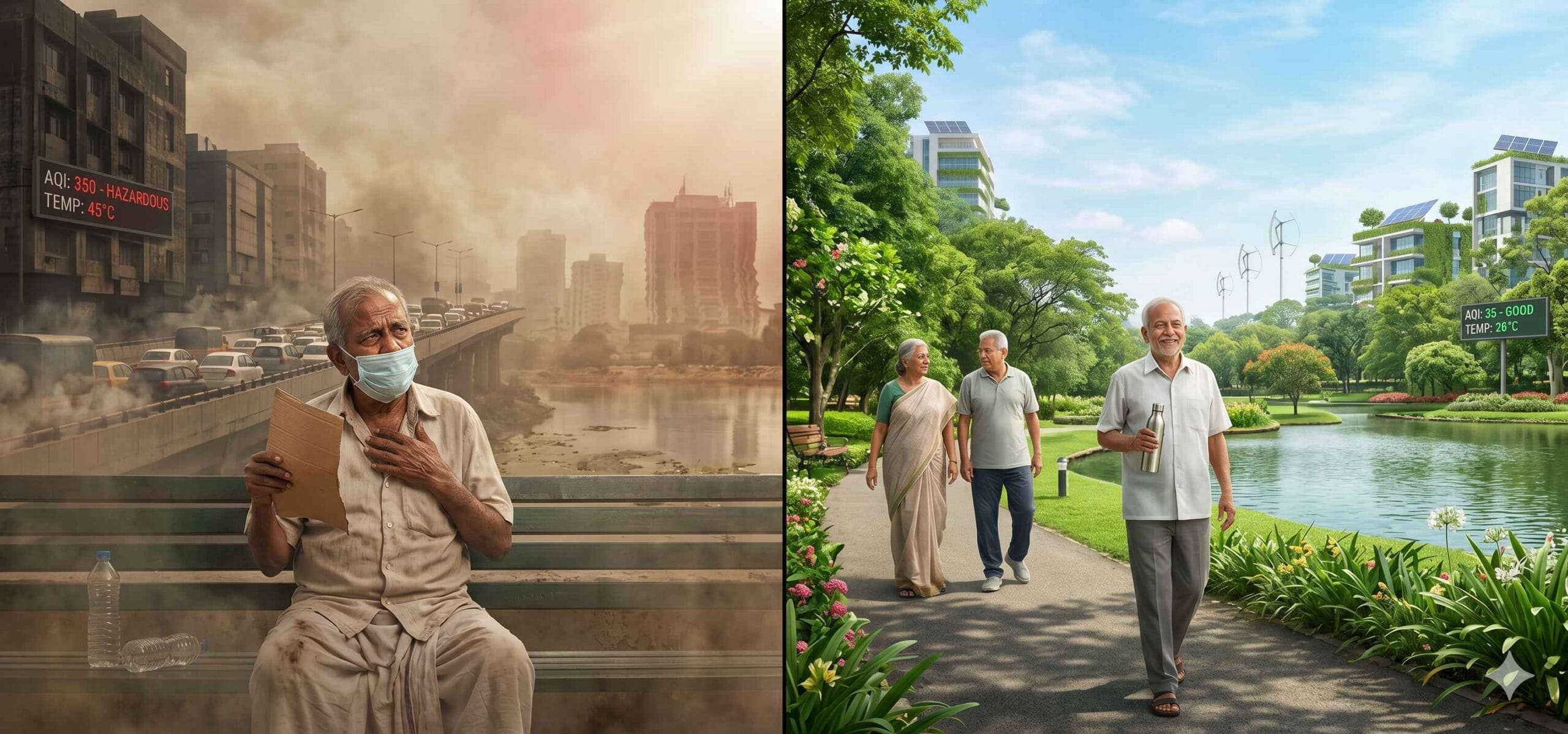
The connection between climate action and healthy longevity has never been more urgent. Global life expectancy has more than doubled in just over a century, from around 32 years in 1900 to about 73 years today, the result of cleaner water, better nutrition, vaccines and more resilient health systems. Yet this remarkable progress now faces an unprecedented threat that could reverse decades of health gains.
The Staggering Human Cost of Climate Inaction
Understanding climate action and healthy longevity begins with confronting sobering statistics. The World Health Organization estimates that between 2030 and 2050, climate change could cause about 250,000 additional deaths every year from undernutrition, malaria, diarrhea and heat stress . Even more alarming, climate-related health impacts could drive an extra 14.5 million deaths and $12.5 trillion in economic losses by 2050.
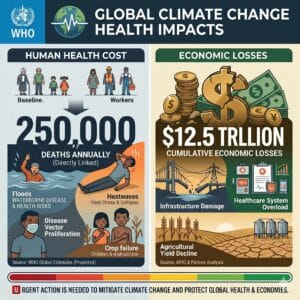 The latest Lancet Countdown report warns that health impacts of climate change are worsening, with millions dying needlessly each year due to fossil fuel dependence, growing greenhouse gas emissions, and failure to adequately adapt. Climate change threatens the essential ingredients of good health—clean air, safe drinking water, nutritious food supply, and safe shelter—and has the potential to undermine decades of progress in global health.
Five Critical Reasons Climate Action Determines Our Health Future
1. Heat-Related Mortality Is Accelerating
We’re closer to the projected 250,000 additional deaths per year from heat stress between 2030 and 2050, with health impacts of heat often underestimated, especially in regions not accustomed to high temperatures . Protecting healthy longevity requires immediate heat adaptation strategies.
2. Economic Productivity Faces Massive Losses
Climate health risks put $1.5 trillion in productivity at stake by 2050, covering seven major health risks exacerbated by climate change and modeling the economic cost of lost output due to climate-driven worker illness and death. This economic burden threatens healthcare systems worldwide.
3. Health Progress Is Being Reversed
The WHO’s World Health Statistics 2025 report shows that global life expectancy fell by 1.8 years between 2019 and 2021, effectively wiping out a decade of progress . Climate change compounds this reversal by adding new health threats.
4. Vulnerable Populations Bear Disproportionate Burden
The risks are uneven, with climate change raising deeper questions of whether future generations will live not only longer lives, but healthier ones, and whether gains in longevity will be distributed fairly within and between countries . Ensuring healthy longevity means protecting those most at risk.
5. The Window for Action Is Narrowing
Health risks and impacts of climate change are worse than ever before across 13 of 20 impact indicators, with fossil fuel investments growing, adaptation finance remaining insufficient, and energy-related emissions reaching unprecedented levels . Immediate action is essential.
The Path Forward: Health-Centered Climate Solutions
WHO will build on momentum through the forthcoming COP30 Special Report on Climate Change and Health, highlighting the policies and investments needed to protect health, equity, and deliver the Belém Action Plan . Attribution science has shown that climate change is responsible for substantial death, disability and illness, and a clearer picture of the global burden could encourage policymakers to treat the climate crisis like a public health emergency.
Taking Action for Healthier, Longer Lives
The relationship between climate action and healthy longevity is clear: our collective health future depends on immediate, comprehensive climate action. The life-saving impact of limited action delivered is already being felt, and global momentum is building. By prioritizing health-centered climate policies, investing in adaptation strategies, and transitioning to clean energy, we can protect the hard-won longevity gains of the past century and ensure healthier lives for generations to come.
The choice is ours: act decisively now to safeguard healthy longevity, or watch as preventable deaths and economic losses mount. The evidence demands we choose health, resilience, and action.
References:
- World Economic Forum (2026, April). “Why climate action matters for healthy longevity.”
https://www.weforum.org/stories/2026/04/why-climate-action-matters-for-healthy-longevity/ - World Health Organization (2025, December 22). “Climate change – Health Topics.”
https://www.who.int/health-topics/climate-change - The Lancet Countdown (2025, October 29). “The 2025 report of the Lancet Countdown on health and climate change: climate change action offers a lifeline.”
https://www.thelancet.com/journals/lancet/article/PIIS0140-6736(25)01919-1/abstract - World Health Organization (2025, October 29). “Climate inaction is claiming millions of lives every year, warns new Lancet Countdown report.”
https://www.who.int/news/item/29-10-2025-climate-inaction-is-claiming-millions-of-lives-every-year–warns-new-lancet-countdown-report - Nature Climate Change (2025, September 17). “Health losses attributed to anthropogenic climate change.”
https://www.nature.com/articles/s41558-025-02399-7