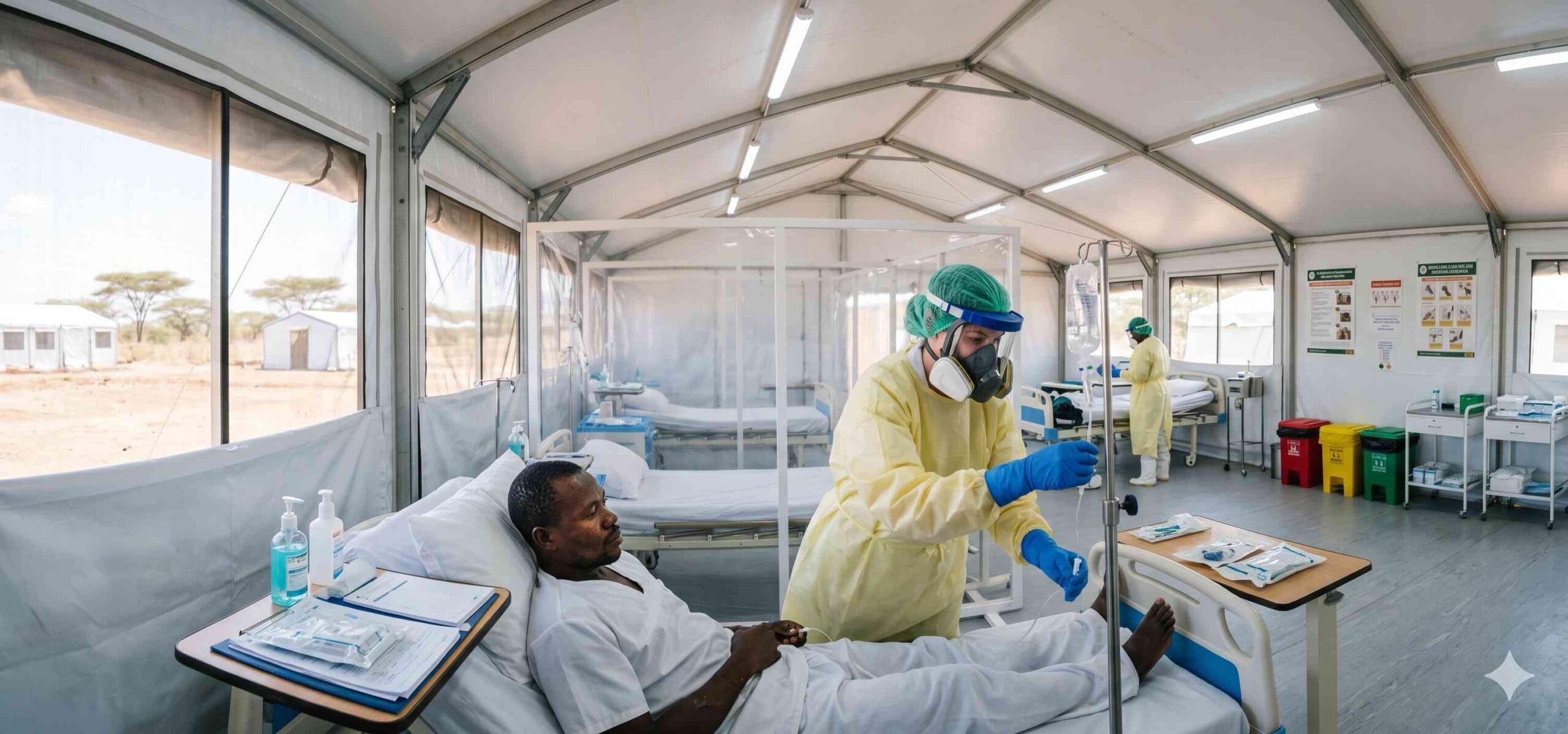
In 2026, the Africa Centres for Disease Control and Prevention (Africa CDC) declared a fresh Ebola outbreak in the Democratic Republic of Congo’s (DRC) eastern Ituri province. With approximately 246 confirmed cases and 65 deaths, primarily concentrated in the gold-mining towns of Mongwalu and Rwampara, the world is once again confronted by one of the most feared viruses known to medicine.
But what exactly is Ebola? Why does it spread so rapidly in specific communities? And what can be done to prevent and treat it? This article answers those questions in full.
What Is Ebola Virus Disease?
Ebola Virus Disease (EVD), formerly known as Ebola haemorrhagic fever, is a severe, often fatal illness caused by the Ebola virus — a member of the Filoviridae family. First identified in 1976 near the Ebola River in what is now the DRC, the disease has since caused multiple outbreaks across central and west Africa, killing tens of thousands of people.
There are six known species of Ebolavirus: Zaire, Sudan, Bundibugyo, Taï Forest, Reston, and Bombali. Of these, the Zaire ebolavirus is historically the most lethal and the most frequently responsible for major outbreaks, including the 2014–2016 West Africa epidemic — the largest in history — and the ongoing 2026 crisis in Ituri.
The case fatality rate (CFR) for Ebola can range from 25% to 90%, depending on the virus strain, healthcare response, and speed of treatment — making it one of the deadliest known pathogens on earth.
How Does Ebola Spread?
One of the most misunderstood aspects of Ebola is its mode of transmission. Unlike influenza or COVID-19, Ebola is not airborne. It cannot spread through casual contact, breathing the same air, or touching contaminated surfaces in the way respiratory illnesses do.
Instead, Ebola spreads through direct contact with the bodily fluids of an infected person — including blood, saliva, vomit, faeces, urine, sweat, breast milk, and semen. This makes healthcare workers, family caregivers, and those who participate in traditional burial rituals particularly vulnerable.
Animal-to-Human Transmission (Zoonosis)
Ebola is a zoonotic disease, meaning it originates in animals and jumps to humans. Fruit bats of the Pteropodidae family are considered the natural reservoir host of the Ebola virus. Humans can become infected through contact with the blood, secretions, or raw meat of infected animals, including bats, non-human primates (gorillas, chimpanzees), forest antelope, and porcupines.
This explains why outbreaks often begin in remote forest or mining communities — exactly as seen in the current 2026 Ituri outbreak, where gold miners in Mongwalu and Rwampara may have had significant contact with wildlife or infected individuals before the disease spread.
Human-to-Human Transmission
Once the virus enters a human population, it spreads rapidly through:
- Direct contact with the blood or secretions of an infected person
- Contaminated objects such as needles, medical equipment, or bedding
- Unsafe burial practices where mourners touch the body of the deceased
- Sexual transmission — the virus can remain in semen for up to 12 months after recovery
Communities with limited access to personal protective equipment (PPE) and infection control infrastructure are at heightened risk, which is why outbreaks disproportionately affect low-income, conflict-affected regions like eastern DRC.
Signs and Symptoms of Ebola
The incubation period for Ebola — the time between exposure and the onset of symptoms — ranges from 2 to 21 days, with an average of 8 to 10 days. A person is not infectious until symptoms appear.
Early Symptoms (Days 1–3)
The initial symptoms are non-specific and can easily be confused with malaria, typhoid, or influenza:
- Sudden onset of fever (often high-grade)
- Severe headache
- Muscle and joint pain
- Fatigue and weakness
- Sore throat
Progressive Symptoms (Days 4–7)
As the virus replicates and the immune response intensifies, symptoms escalate:
- Vomiting and diarrhoea (often severe)
- Abdominal pain and cramping
- Skin rash
- Impaired kidney and liver function
- Hiccups (a warning sign of internal involvement)
Late-Stage / Critical Symptoms
In severe cases, Ebola progresses to systemic haemorrhagic failure:
- Internal and external bleeding (haemorrhage)
- Bleeding from the eyes, ears, nose, and gums
- Multi-organ failure
- Coma and death
It is important to note that not all patients experience overt bleeding — this dramatic symptom, often depicted in popular media, occurs in fewer than 50% of cases. However, it remains a sign of critical deterioration.
Diagnosis
Diagnosing Ebola is challenging because early symptoms mimic many other diseases common in endemic regions. Confirmed diagnosis requires laboratory testing, typically using:
- RT-PCR (Reverse Transcriptase Polymerase Chain Reaction) — the gold standard, detects viral RNA within 3–4 days of symptom onset
- Antigen-capture ELISA tests
- Virus isolation in cell culture (performed only in high-containment BSL-4 facilities)
Rapid diagnostic tests (RDTs) are increasingly being deployed in field settings across Africa, allowing faster case confirmation and contact tracing — a critical step in containing any outbreak.
Treatment of Ebola
For decades, there was no approved treatment for Ebola. Patients received only supportive care — intravenous fluids, electrolyte replacement, oxygen support, and treatment of secondary infections — which, while not curative, significantly improved survival rates.
That changed in 2020, when two monoclonal antibody therapies were approved:
1. Inmazeb (Atoltivimab/Maftivimab/Odesivimab-ebgn)
Approved by the US FDA in October 2020, Inmazeb is a cocktail of three monoclonal antibodies that target the Ebola virus surface protein, preventing it from entering human cells. Clinical trials showed significantly improved survival rates compared to supportive care alone, particularly in patients treated early.
2. Ebanga (Ansuvimab-zykl)
Also approved by the FDA in December 2020, Ebanga (mAb114) is a single monoclonal antibody derived from a survivor of the 1995 Kikwit outbreak. It has shown high efficacy in reducing mortality, particularly in patients with lower initial viral loads.
Both treatments are most effective when administered early in the disease course, reinforcing the critical importance of rapid diagnosis and treatment initiation.
Ebola Vaccines
The development of Ebola vaccines represents one of the most significant advances in infectious disease medicine in recent decades.
rVSV-ZEBOV (Ervebo)
Approved by the FDA and European Medicines Agency (EMA) in 2019, Ervebo is the first licensed Ebola vaccine. It uses a recombinant vesicular stomatitis virus (rVSV) engineered to carry the Ebola surface glycoprotein. Deployed in a ring vaccination strategy — vaccinating all individuals who have had contact with a confirmed case — it has been highly effective in controlling outbreaks.
Ad26.ZEBOV / MVA-BN-Filo (Zabdeno / Mvabea)
A two-dose vaccine regimen approved by the EMA in 2020 for preventive vaccination in at-risk populations. The first dose uses an adenovirus vector, while the booster uses a Modified Vaccinia Ankara (MVA) vector.
These vaccines are now stockpiled by the WHO and deployed to outbreak zones, including the current DRC response in 2026.
The 2026 Ebola Outbreak in DRC’s Ituri Province
The declaration of an Ebola outbreak in Ituri province in 2026 by Africa CDC underscores the persistent vulnerability of the eastern DRC to recurring epidemics. The region has been plagued by decades of conflict, displacement, and healthcare infrastructure collapse — conditions that allow Ebola to spread before containment measures can take hold.
The concentration of cases in gold-mining communities like Mongwalu and Rwampara raises particular concern. Mining towns are characterised by high population density, transient worker populations, limited healthcare access, and frequent movement between rural and urban centres — all factors that accelerate transmission.
Africa CDC, the WHO, and DRC’s Ministry of Health have deployed rapid response teams, initiated ring vaccination campaigns, and established Ebola treatment units in the affected areas. Contact tracing operations are ongoing, with hundreds of individuals under health monitoring.
Why Does the DRC Keep Facing Ebola Outbreaks?
Since the virus was first identified in 1976, the DRC has experienced more Ebola outbreaks than any other country in the world — over 14 separate episodes. This is due to a convergence of factors:
- Persistent presence of animal reservoirs (fruit bats) in forested areas
- Ongoing armed conflict that disrupts healthcare systems and displaces populations
- Vaccine hesitancy fuelled by historical mistrust of government and international health bodies
- Poverty and limited healthcare infrastructure, making early detection and containment difficult
- Cultural funeral practices that involve close contact with the deceased
Addressing Ebola in the DRC requires not just medical interventions, but sustained investment in community trust, healthcare infrastructure, conflict resolution, and health literacy.
How to Protect Yourself and Your Community
While the risk of Ebola outside endemic regions is very low, awareness remains essential for anyone living in or travelling to affected areas:
- Avoid contact with the blood or body fluids of anyone suspected to be ill
- Do not handle the bodies of those who have died from suspected Ebola
- Practice strict hand hygiene, especially after contact with anyone who is sick
- Seek immediate medical care if you develop fever, vomiting, or bleeding after exposure in an affected area
- Support ring vaccination efforts if offered by public health authorities
Healthcare workers should adhere strictly to standard and transmission-based precautions, including appropriate use of PPE.
Conclusion
Ebola remains one of the most formidable infectious diseases in modern medicine — not only because of its high mortality rate but because of the social, cultural, and political complexities that enable its spread. The 2026 outbreak in DRC’s Ituri province is a sobering reminder that Ebola has not been conquered.
Yet the picture is not without hope. Approved vaccines and monoclonal antibody treatments now exist. Rapid diagnostic tools are improving. And international coordination — led by bodies like Africa CDC and the WHO — is stronger than ever. With sustained investment in healthcare systems, community engagement, and equitable access to medical tools, the goal of ending Ebola outbreaks once and for all is within reach.
🔗 References
- World Health Organization. Ebola virus disease [Internet]. WHO; 2024 [cited 2026 May]. Available from: https://www.who.int/news-room/fact-sheets/detail/ebola-virus-disease
- Africa Centres for Disease Control and Prevention. Ebola Outbreak – Democratic Republic of the Congo, Ituri Province [Internet]. Africa CDC; 2026 [cited 2026 May]. Available from: https://africacdc.org/disease-information/ebola-virus-disease/
- Centers for Disease Control and Prevention. Ebola (Ebola Virus Disease): Signs and Symptoms [Internet]. CDC; 2024 [cited 2026 May]. Available from: https://www.cdc.gov/ebola/signs-symptoms/index.html
- US Food and Drug Administration. FDA Approves First Treatment for Ebola Virus — Inmazeb [Internet]. FDA; 2020 [cited 2026 May]. Available from: https://www.fda.gov/news-events/press-announcements/fda-approves-first-treatment-ebola-virus
- Médecins Sans Frontières (MSF). Ebola: MSF’s Response to the Ongoing Crisis in DRC [Internet]. MSF; 2026 [cited 2026 May]. Available from: https://www.msf.org/ebola-crisis-democratic-republic-congo