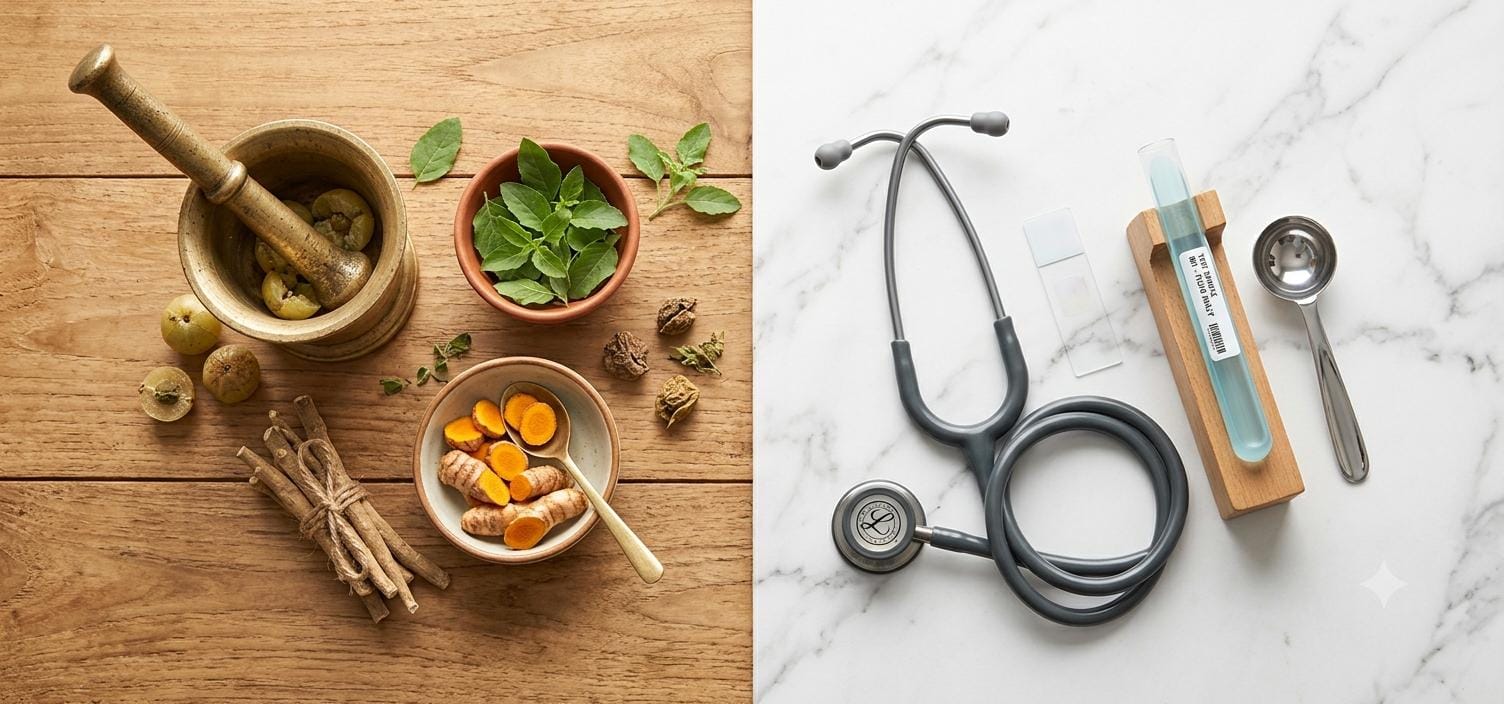
Nagpur Takes Centre Stage as Ayurveda Steps Boldly Into the Future
Ayurveda Day 2026 is being celebrated on 23 September in Nagpur, Maharashtra, under the theme “Ayurveda for a Healthier Tomorrow” (स्वस्थ भविष्य के लिए आयुर्वेद). This year, the Ministry of Ayush wants more than a ceremony. It wants a nationwide health communication campaign that reaches homes, classrooms and clinics.
Union Minister of State (I/C) for Ayush, Shri Prataprao Jadhav, set the tone at a curtain raiser at the National Media Centre, New Delhi, on 7 September. He noted that the world is turning towards preventive care, nutrition, wellness and holistic health, areas where India has long experience.
What Makes Ayurveda Day 2026 Different?
India has observed Ayurveda Day since 2016, originally on Dhanteras, so the date shifted every year. A Government of India gazette notification in March 2025 fixed it permanently on 23 September, giving the observance a stable place in the calendar.
The bigger change is ambition. Jadhav urged that the day become a people’s movement rather than a government programme. He asked the media to carry its message to schools, colleges, Gen Z, and both rural and urban communities.
He framed the campaign as a chain: tradition to knowledge, knowledge to evidence, evidence to innovation, and innovation to public welfare. By 22 September, the official portal had logged over 11,600 activities and around 4.4 lakh participants.
Three Pillars Guiding This Year’s Campaign
The Ayurveda Day 2026 campaign rests on three focus areas announced by the minister.
Integrative healthcare for better health outcomes. The focus is on drawing on the strengths of different systems of medicine, rather than setting them against each other.
Evidence, research and innovation in Ayurveda. The ministry calls these essential for wider global acceptance and the future growth of Ayurveda.
Community wellbeing and sustainable living. This pillar links daily routines, diet and harmony with nature to long-term public health.
Safety and Evidence Take the Spotlight
The Nagpur celebrations include the launch of safety dossiers on Gokshura (Tribulus terrestris) and Chandrasura (Lepidium sativum). Standard Treatment Guidelines for skin disorders are also being released, making safety a central message of Ayurveda Day 2026.
These steps matter because “herbal” does not automatically mean “safe.” Dosing, product quality and interactions with other medicines all affect outcomes. Readers should buy only from licensed manufacturers, consult a registered Ayurveda practitioner, and tell their doctor about any herbal products they take, especially during pregnancy or with chronic conditions. [INTERNAL LINK: your article on herbal supplement safety]
The Global Picture
India’s push aligns with the World Health Organization’s Global Traditional Medicine Strategy 2025–2034, adopted at the 78th World Health Assembly in May 2025. Its four objectives are to strengthen evidence, ensure safety and regulation, integrate traditional medicine into health systems, and maximise its value across sectors.
India also hosts the WHO Global Traditional Medicine Centre in Jamnagar, Gujarat, placing the country at the heart of global efforts to build an evidence base for traditional medicine. Ayurveda Day 2026 is a chance to show that leadership in practice.
What Ayurveda Day 2026 Means for Everyday Health
For most Indians, the practical message is prevention. Ayurveda’s emphasis on daily routine (dinacharya), seasonal routine (ritucharya), mindful eating, adequate sleep and physical activity overlaps closely with modern advice on preventing lifestyle diseases. [INTERNAL LINK: your article on non-communicable disease prevention in India]
Integration, however, works best as a partnership. Serious or acute illness still needs timely conventional care, with Ayurveda playing a complementary role where evidence supports it.
Ayurveda Day 2026 ultimately asks a forward-looking question: can a 5,000-year-old system earn its place in modern healthcare through research, regulation and public trust? Nagpur’s celebrations suggest India is determined to answer yes, with evidence leading the way.
Frequently Asked Questions
1. When and where is Ayurveda Day 2026 celebrated? The main national celebration is on 23 September 2026 in Nagpur, Maharashtra.
2. What is the theme of Ayurveda Day 2026? “Ayurveda for a Healthier Tomorrow” (स्वस्थ भविष्य के लिए आयुर्वेद).
3. Why is Ayurveda Day now fixed on 23 September? A Government of India gazette notification in March 2025 fixed the date. Earlier, it was observed on Dhanteras, which changes every year.
4. What new launches are planned this year? Safety dossiers on Gokshura and Chandrasura, and Standard Treatment Guidelines for skin disorders.
5. Can Ayurveda replace conventional treatment? No. It is best used as a complement, under a registered practitioner’s guidance, alongside conventional care where needed.
References
- Ministry of Ayush. 11th Ayurveda Day 2026: Ayurveda for a Healthier Tomorrow [Internet]. New Delhi: Government of India; 2026 [cited 2026 Sep 23]. Available from: https://ayurvedaday.org.in/
- Medical Dialogues. 11th Ayurveda Day 2026 to focus on Ayurveda for a Healthier Tomorrow: Prataprao Jadhav [Internet]. 2026 Sep [cited 2026 Sep 23]. Available from: https://medicaldialogues.in/ayush/ayurveda/news/11th-ayurveda-day-2026-to-focus-on-ayurveda-for-a-healthier-tomorrow-prataprao-jadhav-178927
- Business News Week. 11th Ayurveda Day celebrations to spotlight research, innovation and global vision [Internet]. 2026 Sep 23 [cited 2026 Sep 23]. Available from: https://businessnewsweek.in/health/11th-ayurveda-day-celebrations-to-spotlight-research-innovation-and-global-vision/
- World Health Organization. Global traditional medicine strategy 2025–2034 [Internet]. Geneva: WHO; 2025 [cited 2026 Sep 23]. Available from: https://www.who.int/teams/who-global-traditional-medicine-centre/traditional-medicine-strategy-2025-2034
- World Health Organization. WHA78: traditional medicine takes centre stage [Internet]. Geneva: WHO; 2025 Jun 2 [cited 2026 Sep 23]. Available from: https://www.who.int/news/item/02-06-2025-wha78–traditional-medicine-takes-centre-stage