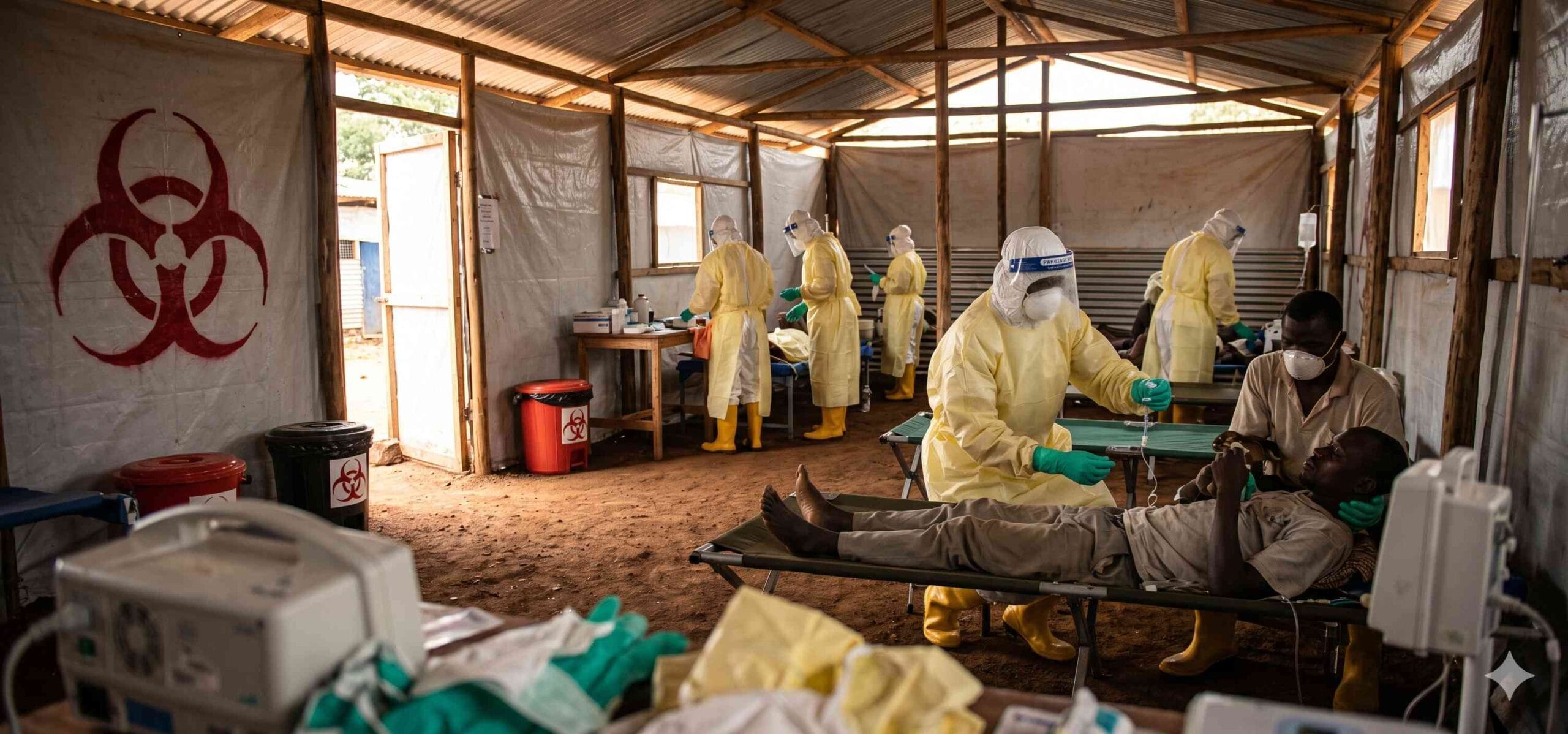
On May 5, 2026, the World Health Organization received an urgent alert about a cluster of high-mortality illness in Mongbwalu Health Zone, Ituri Province, in the northeast of the Democratic Republic of the Congo (DRC). The deaths included healthcare workers — a grim early sign of a pathogen spreading in close-contact settings. Ten days later, laboratory analysis confirmed what many feared: Bundibugyo virus disease (BVD), a rare and deadly species of Ebola virus for which there is no approved vaccine, no licensed treatment, and — critically — no significant commercial pipeline pushing either to the finish line.
By May 16, 2026, WHO Director-General had declared the outbreak a Public Health Emergency of International Concern (PHEIC). By May 18, Africa CDC had escalated it to a Public Health Emergency of Continental Security. And yet, in labs and boardrooms around the world, not a single approved tool existed to fight it. The 2026 Bundibugyo Ebola outbreak is not just a medical emergency — it is a mirror held up to the most profound inequity in global health: the vast, structural gap between the diseases the world cures and the diseases the world ignores.
What Is Bundibugyo Virus Disease?
Bundibugyo virus (BDBV) is one of six known species of Ebola virus, first identified during an outbreak in Bundibugyo District, Uganda, in 2007–2008. It belongs to the family Filoviridae and causes a severe and often fatal haemorrhagic fever. Prior to 2026, only two confirmed outbreaks of BVD had been recorded: Uganda in 2007–2008, and DRC’s Province Orientale in 2012, which resulted in 59 cases and 34 deaths.
The 2026 outbreak is the third — and by far the largest and most geographically complex. In previous outbreaks, case fatality rates for BVD ranged between 30% and 50%. That is not as high as the most lethal Ebola strains, but in resource-depleted environments with limited supportive care, it translates into catastrophic human loss.
Unlike Ebola virus disease (EVD), which now has two approved vaccines — rVSV-ZEBOV (Ervebo) and the two-dose Ad26.ZEBOV/MVA-BN-Filo vaccine — Bundibugyo virus has no licensed vaccine or specific therapeutics. The world had decades of warning. This is the third outbreak. The window for preparation came and went.
The 2026 Outbreak: What Is Happening on the Ground?
The scale of the current outbreak has been alarming from the outset. As of May 24, 2026, BVD has been confirmed in three provinces of the DRC — Ituri, Nord-Kivu, and Sud-Kivu — and Médecins Sans Frontières (MSF) has reported nearly 500 suspected cases and more than 130 deaths across multiple health zones. Five cases linked to the DRC outbreak have also been reported in Uganda’s capital, Kampala, among individuals who had travelled from DRC.
The outbreak is occurring against a backdrop of extreme adversity. Conflict has intensified in northeastern DRC since late 2025, with over 100,000 people newly displaced in the preceding two months. The affected areas include active mining zones with intense population movement — conditions that accelerate transmission and frustrate contact tracing. Healthcare infrastructure across Ituri Province is severely under-resourced, even by regional standards.
The WHO Director-General, speaking on May 20, 2026, laid out five factors that drove the emergency classification: the scale of transmission, the deaths of healthcare workers, population displacement and conflict, frequent cross-border movement, and the absence of any approved vaccine or treatment for Bundibugyo virus. Current public health response is built entirely on containment, isolation, contact tracing, and supportive care — the same tools available in 1976, when Ebola was first identified.
A Disease Without a Vaccine: The Research and Funding Chasm
This is where the story of the 2026 outbreak becomes a story about global health justice. Bundibugyo virus has caused three outbreaks over nearly two decades. Scientists know it exists. They know its structure. They know it kills. And yet no approved vaccine or antiviral has been developed for it.
Why? Because Bundibugyo virus primarily kills people in the DRC and Uganda — two of the world’s poorest countries. There is no commercial market. There is no pharmaceutical return on investment. There is no geopolitical urgency from wealthy nations whose populations are not at risk. The result is a research and development desert.
Vaccine development is extraordinarily expensive — estimates suggest it costs between US$35 million and US$60 million per vaccine per year, over a development cycle that typically spans 12 to 15 years. For diseases that affect primarily poor, marginalised, or conflict-affected populations, the commercial incentives required to sustain this investment simply do not exist. The COVID-19 pandemic demonstrated with remarkable clarity what can happen when the political will and commercial interest align: vaccines were developed, tested, manufactured, and deployed globally within 12 months. For Bundibugyo Ebola, political will has never materialised — and commercial interest never will.
This is not a new problem. It is the defining structural failure of global health. The 2026 outbreak has simply made it impossible to ignore.
The Broader Crisis: Neglected Tropical Diseases and the World’s Most Overlooked Patients
Bundibugyo virus disease exists within a much larger ecosystem of neglect. The WHO formally classifies 21 diseases as Neglected Tropical Diseases (NTDs) — infections that collectively affect over 1.7 billion people annually, almost entirely in impoverished tropical and subtropical regions. These include leishmaniasis, Chagas disease, schistosomiasis, lymphatic filariasis, human African trypanosomiasis (sleeping sickness), and many others.
NTDs are not obscure rarities. They are ancient maladies that cause severe illness, profound disability, disfigurement, and early death. They trap families and communities in cycles of poverty, because sick people cannot work, children cannot attend school, and healthcare systems already stretched thin are further burdened. One 2026 analysis published in Nature Communications described NTDs as diseases “unified by their predilection for marginalised populations” — and noted that meaningful progress toward the WHO’s 2030 NTD elimination targets remains fragile, with funding gaps, supply chain disruptions, and surveillance deficits capable of reversing years of gains overnight.
The funding landscape for NTD research is not merely inadequate — it is structurally broken. Annual G-FINDER surveys consistently show that global R&D investment in NTDs falls dramatically short of what is needed, and that what funding does exist is rarely allocated in a manner that moves products through the development pipeline to patients. For some diseases, the gap is almost total: Chagas disease, which kills approximately 10,000 people annually and afflicts 6–7 million, has almost no realistic investment pipeline for new drugs, vaccines, or diagnostics.
Ebola has always sat in an uncomfortable space between a neglected tropical disease and a globally feared pathogen. When outbreaks spill toward wealthier regions or threaten international travel — as they did during the 2014–2016 West Africa epidemic — funding surges and vaccine development accelerates. When outbreaks remain contained to poor, conflict-affected regions, they remain largely invisible to global capital.
The COVID-19 Lesson the World Has Not Applied
The COVID-19 pandemic shattered the argument that rapid vaccine development for emerging pathogens is technically impossible. It is not. What it requires is money, political will, and pre-positioned scientific infrastructure. The international community mobilised COVAX, Operation Warp Speed, and billions in public and private funding because wealthy nations faced an existential threat.
As one 2026 analysis in Discover Public Health observed, while the COVID-19 response demonstrated what “rapid, politically prioritized and commercially attractive vaccine development can achieve,” NTDs remain in a “substantially different market and political economy context — with weaker commercial incentives, divided donor attention and less visible political pressure.” The lessons of COVID-19 cannot simply be applied to NTDs without first confronting the inequities in risk, reward, and representation that define the global health architecture.
What would it actually take to close this gap? Several mechanisms have demonstrated promise: the Coalition for Epidemic Preparedness Innovations (CEPI), which supports vaccine development for diseases like Bundibugyo virus through proactive R&D funding; Product Development Partnerships (PDPs), which de-link vaccine development from profit expectations; push-and-pull incentives that lower the risk and raise the reward for pharmaceutical investment in neglected diseases; and binding commitments under the WHO Pandemic Agreement — signed by member states in 2025 — to integrate NTD control into global health security planning.
None of these, however, will help the healthcare workers and families of Ituri Province today.
What Needs to Change: A Call for Structural Reform
The 2026 Bundibugyo Ebola outbreak is a public health emergency with a very specific address: the intersection of extreme poverty, armed conflict, weak health infrastructure, and decades of research neglect. Responding to it effectively requires more than deploying emergency responders and issuing travel advisories. It requires a frank, uncomfortable reckoning with how the world decides which lives are worth protecting in advance.
Several structural reforms are urgently needed:
Advance Market Commitments for Neglected Diseases: Governments and multilateral institutions must guarantee future markets for vaccines and treatments targeting diseases that affect low-income populations, reducing the financial risk for developers.
Mandatory NTD Investment Provisions: The WHO Pandemic Agreement, and future revisions to the International Health Regulations, should include binding provisions ensuring a minimum level of global R&D investment in diseases with demonstrated outbreak potential, regardless of commercial attractiveness.
Equity-Based Prioritisation of Outbreak Research: Organisations like CEPI and MSF’s Drugs for Neglected Diseases initiative (DNDi) must receive expanded mandates and funding to build a genuine pipeline for pathogens like Bundibugyo virus between, not just during, outbreaks.
Strengthening Health Systems in Outbreak-Prone Regions: Vaccine development alone is insufficient. The DRC’s Ituri Province needs functioning cold chains, trained healthcare workers, functional laboratories, and community trust — none of which can be improvised once an outbreak begins.
Key Takeaways
- The 2026 Bundibugyo Ebola outbreak in DRC and Uganda was declared a PHEIC on May 16, 2026, with nearly 500 suspected cases and over 130 deaths reported by MSF.
- Bundibugyo virus has no approved vaccine or antiviral treatment — despite three outbreaks since 2007.
- The outbreak is occurring against a backdrop of armed conflict, mass displacement, and severely under-resourced health infrastructure.
- NTDs affect over 1.7 billion people globally, concentrated in the world’s poorest communities, yet receive disproportionately low R&D investment.
- COVID-19 proved rapid vaccine development is possible; the difference for NTDs is not science — it is political will and commercial incentive.
- Structural reform — including advance market commitments, binding NTD provisions in international agreements, and strengthened health systems — is essential to prevent the next Bundibugyo Ebola from catching the world unprepared.
Frequently Asked Questions (FAQs)
Q1. What is Bundibugyo virus disease, and how is it different from Ebola?
Bundibugyo virus disease (BVD) is caused by the Bundibugyo virus — one of six known species within the Ebola genus. While all Ebola species cause severe haemorrhagic fever, Bundibugyo virus is distinctly rarer and, critically, has no approved vaccine or licensed treatment, unlike Ebola virus disease, which now has two approved vaccines. Case fatality rates for BVD range from 30% to 50%.
Q2. Is the 2026 Bundibugyo Ebola outbreak a risk to people outside DRC and Uganda?
WHO has assessed the global risk as low, while classifying the national and regional risk as high. The outbreak has been declared a Public Health Emergency of International Concern (PHEIC) due to the absence of vaccines, the conflict context, and cross-border transmission, but the risk to general populations outside the affected provinces remains very low. Travellers to DRC and Uganda should follow current CDC and WHO travel guidance.
Q3. Why is there no vaccine for Bundibugyo virus despite it being known since 2007?
The primary reason is the lack of commercial incentive. Bundibugyo virus outbreaks have historically been confined to extremely poor, conflict-affected regions in Central Africa. Vaccine development is expensive — up to US$60 million per year over 12–15 years — and pharmaceutical companies have little financial motivation to invest when no profitable market exists. This is the same structural failure that leaves most neglected tropical diseases without adequate treatment options.
Q4. What are neglected tropical diseases (NTDs), and how do they relate to the Ebola outbreak?
NTDs are a group of 21 infections classified by WHO as disproportionately affecting impoverished, marginalised populations in tropical and subtropical regions — including diseases such as leishmaniasis, Chagas disease, schistosomiasis, and human African trypanosomiasis. They affect over 1.7 billion people globally yet receive far less R&D investment than diseases affecting wealthier populations. Bundibugyo virus disease shares the core characteristics of NTDs: it primarily affects poor communities, lacks commercial attractiveness, and suffers from chronic research underfunding.
Q5. What can be done to prevent future outbreaks of diseases like Bundibugyo virus from occurring without any treatment or vaccine?
The solutions require structural reform rather than individual action. Key approaches include advance market commitments that guarantee future markets for neglected disease vaccines; binding international agreements — including under the 2025 WHO Pandemic Agreement — requiring minimum R&D investment in outbreak-prone pathogens; expanded mandates and funding for bodies like CEPI and DNDi; and sustained investment in health system infrastructure in outbreak-prone regions, including laboratory capacity, cold chains, and community health workforces.
References
- World Health Organization. Ebola disease caused by Bundibugyo virus – Democratic Republic of the Congo and Uganda: Disease Outbreak News. 2026 May 16 [cited 2026 May 25]. Available from: https://www.who.int/emergencies/disease-outbreak-news/item/2026-DON602
- Centers for Disease Control and Prevention. Ebola disease outbreak in the Democratic Republic of the Congo and Uganda. Health Alert Network Notice HAN-00530. 2026 May 15 [cited 2026 May 25]. Available from: https://www.cdc.gov/han/php/notices/han00530.html
- Médecins Sans Frontières (MSF). The Bundibugyo virus challenge: why is this Ebola disease outbreak different. 2026 May 21 [cited 2026 May 25]. Available from: https://www.msf.org/bundibugyo-virus-challenge-why-ebola-disease-outbreak-different
- Engels D, Zhou XN. Confronting neglected tropical diseases: a moral and strategic imperative for global equity. Infect Dis Poverty. 2026;15:17 [cited 2026 May 25]. Available from: https://link.springer.com/article/10.1186/s40249-026-01414-z
- European Centre for Disease Prevention and Control. Threat assessment brief: Ebola disease outbreak caused by Bundibugyo virus – Democratic Republic of the Congo and Uganda – 2026. 2026 May [cited 2026 May 25]. Available from: https://www.ecdc.europa.eu/en/publications-data/threat-assessment-brief-ebola-disease-outbreak-caused-bundibugyo-virus-democratic