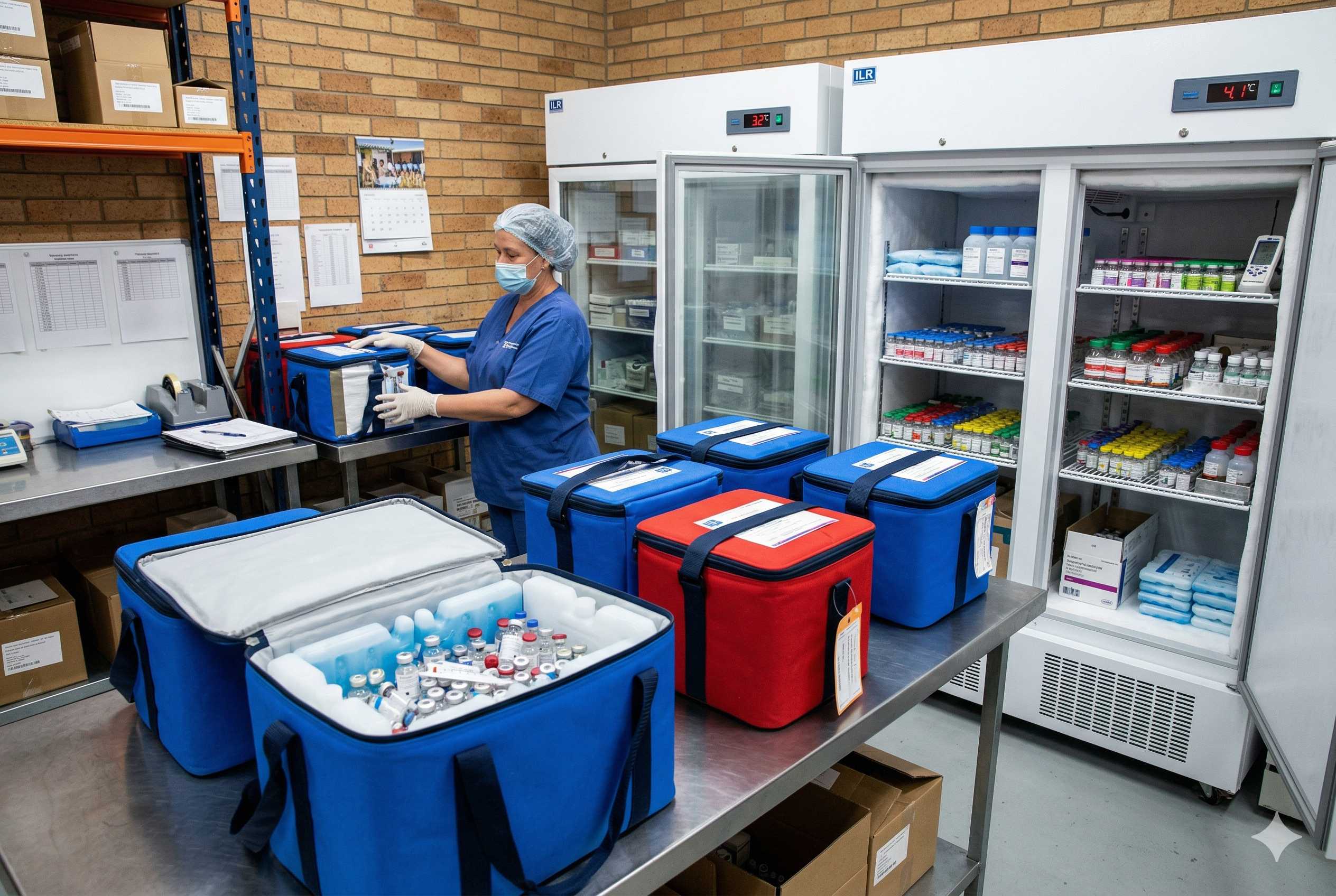
Cold chain maintenance is a critical component of successful immunization programs. It refers to the system of storing and transporting vaccines at recommended temperatures from the point of manufacture to the point of administration. Most vaccines are sensitive biological substances that can lose their potency if exposed to temperatures outside the prescribed range, usually between +2°C and +8°C. Ensuring the integrity of this temperature-controlled system is essential to guarantee vaccine efficacy and protect public health.
The cold chain begins at the manufacturing facility, where vaccines are stored in specialized cold rooms or freezers. From there, they are transported through a network of refrigerated vehicles, cold boxes, and vaccine carriers to regional stores, health centers, and outreach sites. At each level, maintaining the appropriate temperature is crucial. Even brief exposure to excessive heat, freezing, or direct sunlight can render vaccines ineffective without visible signs of damage.
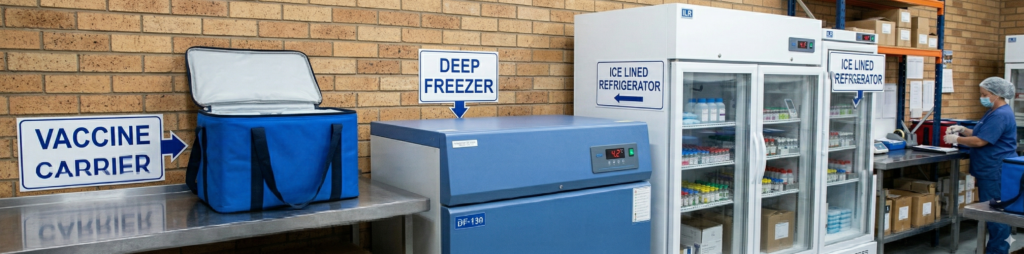
Key equipment used in cold chain maintenance includes ice-lined refrigerators (ILRs), deep freezers, cold boxes, and vaccine carriers. ILRs are commonly used at primary health centers because they maintain stable temperatures even during power outages. Vaccine carriers, equipped with conditioned ice packs, are used for transporting vaccines to outreach sessions. The proper conditioning of ice packs is important to prevent freezing of vaccines, especially those that are freeze-sensitive such as DPT, hepatitis B, and pentavalent vaccines.
Temperature monitoring is an integral aspect of cold chain management. Devices such as thermometers, digital data loggers, and vaccine vial monitors (VVMs) are used to ensure that vaccines are stored within the recommended temperature range. VVMs are particularly useful as they provide a visual indication of cumulative heat exposure, helping healthcare workers determine whether a vaccine is still usable.
Human resources and training also play a vital role. Healthcare workers must be trained in correct storage practices, handling procedures, and emergency responses in case of equipment failure. Regular supervision and supportive monitoring help ensure adherence to protocols and identify gaps in the system.
Challenges in maintaining the cold chain include unreliable electricity supply, equipment malfunction, transportation delays, and lack of trained personnel, especially in remote or resource-limited settings. Innovative solutions such as solar-powered refrigerators and real-time temperature monitoring systems are being increasingly adopted to address these issues.
In conclusion, cold chain maintenance is fundamental to the success of immunization programs. A robust and well-managed cold chain ensures that vaccines retain their potency and provide optimal protection against preventable diseases. Strengthening infrastructure, training personnel, and adopting new technologies are essential steps toward achieving effective and reliable vaccine delivery systems.